Wearable & Lifelogging Cameras
Smart Glasses With Cameras in 2026: An Honest Field Guide
Smart glasses with built-in cameras have finally caught up to what the Narrative Clip tried to do — but with new lock-in problems. Here's a current map.
The category has had a long, embarrassing adolescence. Google Glass arrived in 2013 with a head-mounted prism, a $1,500 Explorer price tag, and the social aura of a wet sock; Snap put out the first Spectacles in 2016 as yellow sunglasses that shot circular video, then iterated through several generations with diminishing public interest; Vuzix kept building variants nobody outside a warehouse ever wore; Ray-Ban Stories (gen 1, with Facebook in 2021) sold poorly and had quietly broken software. The current installment, Ray-Ban Meta, is the first version that a normal adult will put on without flinching.
That is the whole story of smart glasses with cameras, compressed. One mainstream product, a graveyard behind it, and a privacy debate that finally got written into the hardware.
Ray-Ban Meta — the only mainstream pick today
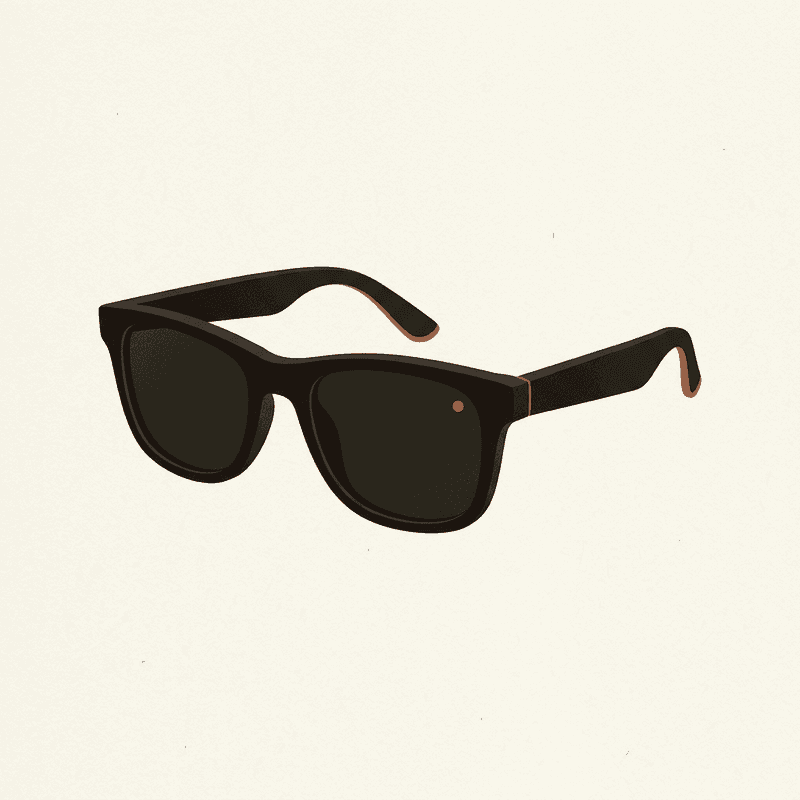
Ray-Ban Meta Smart Glasses
A socially acceptable hands-free camera you can wear daily — quality is good, but cloud and AI features lean on Meta accounts.
Best for: Daily wearers who want POV photos and short clips without holding a camera.
Review note: The best daily-wear option for quick POV photos and short clips, held back by Meta account dependence and limited local-first control.
Pros
- 12 MP ultrawide; up to 1080p video
- Capture LED signals recording to bystanders
- Works as Bluetooth headphones and AI assistant
- Looks like normal sunglasses
Cons
- Short clips only; not designed for hours of continuous capture
- Tied to Meta View app and account
- Limited control over local-only workflows
We say “only” carefully. There are other camera-equipped glasses on sale; none of them have Ray-Ban Meta’s combination of normal-looking frames, stocked distribution, and a software stack that gets updated. The hardware itself is unremarkable in a good way: a 12 MP ultrawide stills sensor, 1080p video in short clips, open-ear speakers, a touch strip on the right temple, and roughly four hours of mixed use with the charging case topping it back up.
The catch is what surrounds the device. Capture lives in the Meta View app, which lives behind a Meta account. The on-device AI features that Meta has been pushing (live translation, “look and ask” image lookup) call out to Meta’s servers. You can pull photos and clips off the glasses, but the comfortable path is the one that goes through Meta’s infrastructure.
The capture LED, and why it can’t be turned off
There is a small white LED on the front-right of the Ray-Ban Meta frames that lights up whenever the camera is recording or taking a photo. You cannot disable it in software. Cover it with electrical tape and you’ve broken the camera bridge that the Meta View app uses to confirm a capture happened; pry it off and you’ve voided the warranty.
This is a design choice, not an oversight. The first Ray-Ban Stories shipped with a much fainter LED that critics correctly called inadequate, and Meta got dragged in regulator letters from Ireland and Italy. The current LED is brighter, larger, and positioned where a bystander standing across a small table will actually see it.
Is it perfect? No. In bright outdoor light it’s harder to spot. From behind, it’s invisible. But it’s a real, hardware-enforced signal that recording is happening, and it’s the kind of thing the original Narrative Clip never had — that little square camera shot two photos a minute with no indicator at all, and the criticism it absorbed for that is part of why every wearable camera now ships with a capture light.
What smart glasses do well
The form factor is the feature. A camera on your face that looks like sunglasses sits in a different category from a GoPro on a chest strap or a pebble clipped to your shirt. You wear it through airport security without anyone blinking. You wear it at a wedding without becoming the wedding’s main character. Stills are good in daylight, fine indoors, and the ultrawide framing reliably catches what you actually saw.
Short clips are where the camera earns its keep. Watching your kid blow out candles. A street performer you’ll only walk past once. The point of view your hands can’t hold a phone for because they’re carrying groceries. Audio capture is genuinely decent thanks to multiple microphones in the temples, and the AI features (ask the glasses what something is, get a spoken answer) work well enough that they stop feeling like a demo.
What they don’t do
Long continuous capture. Forty-five minutes of 1080p will end your battery and fill the buffer. True offline operation; the moment you want to do anything beyond pulling raw files off the device, you are in Meta’s app. Easy export to whatever cloud or NAS you already use; it’s possible, it’s just an extra step every time, and the friction is the product.
If you want a wearable camera that you own, that fills a folder on your laptop, and that does not require a social network’s account, you want a different category — a magnetic-clip pebble like the GO 3S, not glasses.
The historical alternatives, briefly
Snap Spectacles went through four publicly sold generations and a developer-only AR pair after that. The early ones shot circular video for Snapchat and very little else. The later AR versions are aimed at developers, not buyers. Charming product, never a commercial pick for a lifelogger.
Google Glass launched its Explorer Edition in 2013 for $1,500, became a meme, and was pulled from consumer sale in 2015. The Enterprise editions limped on in factories and clinical settings until Google ended the program in 2023. The lesson Google bought with that money is now built into Ray-Ban Meta: people will wear a camera if it looks like sunglasses, and they won’t wear one if it looks like a piece of medical equipment.
Vuzix is still around, still making head-worn cameras, still selling almost exclusively to enterprise customers — warehouse picking, remote-expert support, field service. If you’re not on a procurement team, you can skip them.
The privacy question, always
Smart glasses are easier to read than a Narrative Clip — the LED helps — but harder to read than a phone held up at face height. Treat them like a phone you happen to be wearing, not like sunglasses. Don’t record in bathrooms, locker rooms, or anywhere a hidden camera would be obviously wrong. Tell people when you’re going to capture them. Our wearable-camera privacy guide goes deeper on the consent layer; we won’t recap it here.
Should you buy a pair?
Yes if you want a daily-carry camera that looks like normal eyewear, and you’re at peace with Meta sitting in the middle of your photo library. The hardware is good. The capture LED is a real safety feature. The AI assistant is the rare voice interface that doesn’t feel like a punishment.
No if what you actually want is the Narrative Clip’s design ethic — lower-spec hardware, owned by you, with photos that land in a folder you control. Smart glasses are the closest form factor successor to that little square. They are not the closest philosophical successor. Those are different products, and confusing the two is how people end up with a $300 wearable that they’re already a little resentful of after a month.
Frequently asked questions
What smart glasses have cameras in 2026?
The Ray-Ban Meta line is the only mainstream consumer pick with real distribution and ongoing software support. Snap Spectacles still exist in developer-targeted form, Vuzix remains enterprise-focused, and Google Glass is gone.
Are Ray-Ban Meta glasses worth it?
If you want a socially acceptable hands-free camera for daily wear, yes. If you want to own your archive without a Meta account, no — the workflow assumes the Meta View app and cloud.
Do smart glasses have a recording indicator?
The Ray-Ban Meta glasses have a small white capture LED on the front that lights whenever you take a photo or record video. It can't be disabled. That's intentional, and it's the right call.
Can you record video with smart glasses?
Yes — Ray-Ban Meta records short 1080p clips. Continuous all-day video is not the design goal. Battery and storage realistically support short captures throughout a day, not hours-long recording sessions.
What about Google Glass?
Google Glass Explorer Edition launched in 2013, became a cultural punchline, and was eventually retired. The Enterprise editions stayed alive for industrial use, but Google ended that program in 2023.
Are smart glasses good for lifelogging?
They're the closest mainstream consumer hardware to the Narrative Clip's spirit, but they capture on demand, not on a 30-second timer. Lifelogging in the original sense — passive, automatic, cumulative — isn't really what they're built for.