Wearable & Lifelogging Cameras
DJI Osmo Action 5 Pro vs GoPro HERO 13 Black for Chest-Mount POV
DJI Osmo Action 5 Pro vs GoPro HERO 13 Black for chest-mount POV: battery, stabilization, mounts, low light, storage, and creator workflow in 2026.
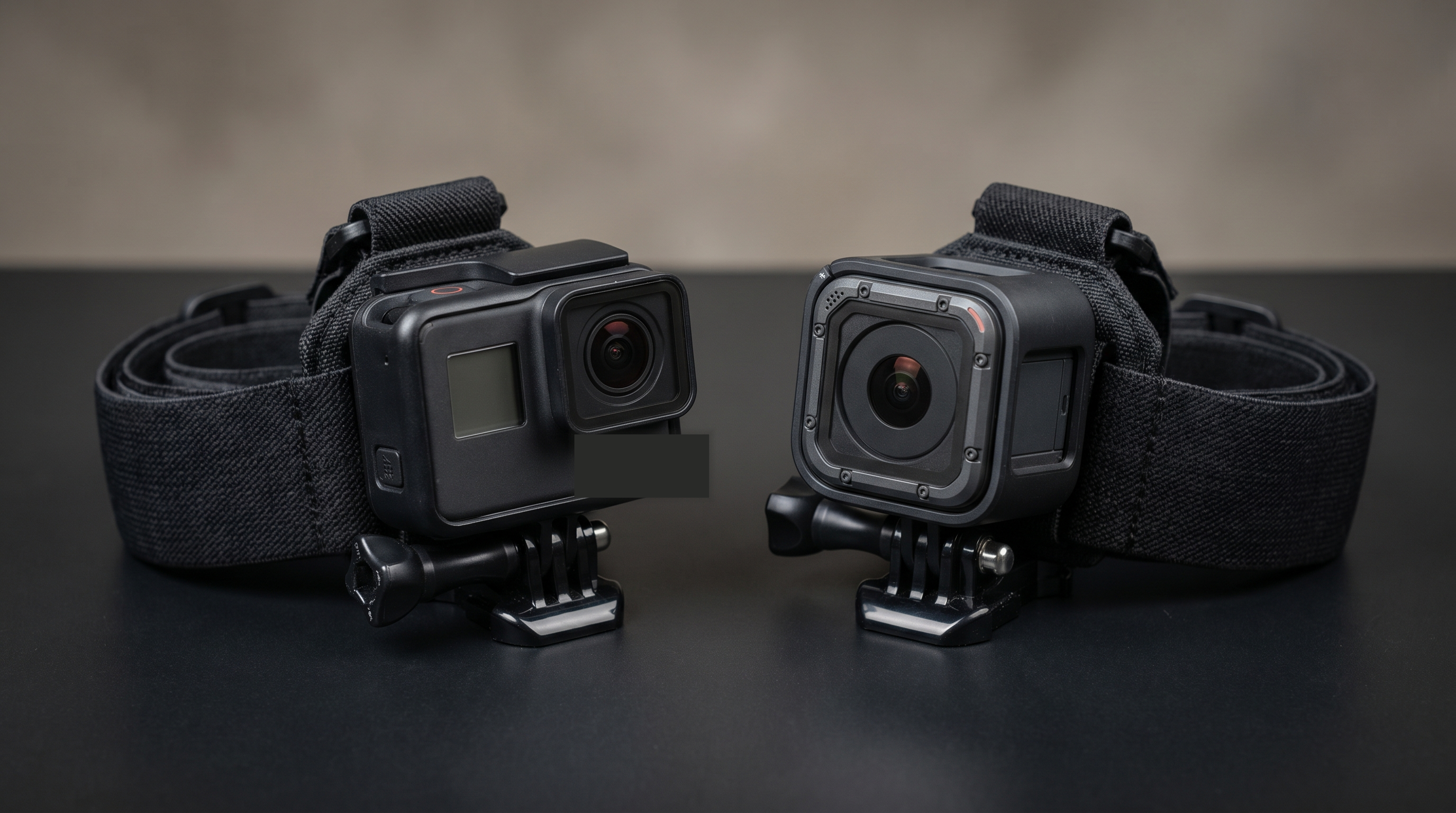
DJI Osmo Action 5 Pro vs GoPro HERO 13 Black is the practical chest-mount POV fight in 2026. Not lifelogging. Not smart glasses. Chest-mount POV is deliberate recording: biking, hiking, skiing, workshop projects, travel walks, cooking, or creator footage where both hands are busy. The DJI pitch is battery, sensor, screens, and value. The GoPro pitch is ecosystem, mounts, lens mods, and a decade of default action-camera trust. Both can produce excellent footage. Both are too large for casual all-day memory capture. This guide compares them through the lens that matters for NarrativeClip readers: how they behave when worn, how the files get backed up, how much cloud you can avoid, and which one is less annoying after the first week.
Why chest-mount POV matters now
Chest-mount footage has become the honest middle ground between phone video and full creator rig. It shows hands, tools, trails, steering, cooking, and movement without asking someone else to film. For memory work, it captures the experience of doing something rather than posing next to it.
The category is also more mature. DJI’s official Osmo Action 5 Pro specs list a 1/1.3-inch sensor, 4K/120 modes, 20 m waterproofing without a case, 64 GB built-in storage, microSD expansion, and an operating-time claim up to 240 minutes under controlled 1080p conditions. GoPro’s official HERO13 Black announcement lists 5.3K/60, 4K/120, magnetic latch mounting, HB-Series lens support, Wi-Fi 6, GPS, and a redesigned 1900 mAh Enduro battery.
That is a strong field. The question is not whether either camera can shoot. The question is which one makes the better chest-mounted memory tool. Battery, mounts, heat, low light, file transfer, and backup matter more than headline resolution.
What to evaluate before choosing
First, evaluate the mount system. Chest POV depends on stable mounting and fast removal. GoPro’s ecosystem is everywhere: chest harnesses, backpack clips, bike mounts, third-party rigs, and old accessories in drawers. DJI’s magnetic quick-release system is elegant, but GoPro’s installed base is hard to beat.
Second, evaluate battery and thermals. DJI has the stronger official runtime story. GoPro’s HERO13 Black improves runtime over prior generations, but high-resolution settings still drain batteries and create heat. For chest POV, plan for spare batteries either way.
Third, evaluate low light. Chest-mounted footage often happens indoors, at dusk, under trees, or in restaurants. DJI’s larger sensor and low-light positioning give it an edge for travel and daily-life footage. GoPro remains excellent in bright action environments.
Fourth, evaluate storage. DJI’s built-in storage can save a shoot when you forget a card. GoPro relies on microSD. Both should feed a nightly backup workflow. Neither brand cloud should be the only archive.
Official pages to check before purchase: DJI Osmo Action 5 Pro specs, DJI’s launch newsroom post, GoPro’s HERO13 Black announcement, and GoPro’s camera comparison page.
Comparison table: DJI vs GoPro for chest POV
| Criterion | DJI Osmo Action 5 Pro | GoPro HERO 13 Black |
|---|---|---|
| Best strength | Battery, low light, built-in storage | Mount ecosystem, lens mods, default action workflow |
| Video modes | Up to 4K/120 | Up to 5.3K/60 and 4K/120 |
| Waterproofing | 20 m without case per DJI specs | Rugged waterproof action-camera design |
| Storage | 64 GB built-in plus microSD | microSD |
| Mounting | Magnetic quick release | Magnetic latch, fingers, 1/4-20, huge accessory base |
| Main weakness | Smaller third-party ecosystem | Battery and heat at demanding settings |
Affiliate disclosure: This page contains affiliate links. If you buy through them, we may earn a small commission at no extra cost to you. It never changes what we recommend. As an Amazon Associate I earn from qualifying purchases. Read more.
Camera comparison and workflow
Chest-mount stability
GoPro wins the ecosystem round. If you already own a chesty, bike mounts, helmet mounts, clamps, and spare brackets, staying with GoPro is rational. HERO13 Black’s magnetic latch adds speed without abandoning existing mounting fingers.
DJI’s magnetic system is cleaner out of the box. It is fast, tidy, and easy to move between mounts. The issue is not quality; it is availability. In a random travel town, GoPro-compatible accessories are easier to find.
Image and low light
DJI’s larger sensor and SuperNight-style positioning make it more appealing for travel and memory footage, where light is often imperfect. If you record markets, evening walks, kitchens, cabins, and indoor projects, DJI has the more forgiving profile.
GoPro is still excellent in bright motion. Sports, snow, water, and daylight trails remain its comfort zone. The 5.3K mode gives cropping room, and lens mods add creative flexibility.
Battery and runtime
DJI has the clearer advantage for long sessions. Its official 240-minute claim is under controlled conditions, but even discounting it, the Action 5 Pro is the battery-forward camera here.
GoPro’s redesigned Enduro battery is better than older GoPro batteries, but chest POV creators should still buy spares. Recording at high settings, with stabilization and cold weather, will punish either camera.
Storage and backup
DJI’s built-in storage is not a reason to skip cards. It is a safety net. Use microSD anyway, then copy footage after each session. GoPro’s microSD-only workflow is straightforward, but forgetting a card ends the shoot.
For both cameras, the backup rule is simple: do not format a card until the footage exists in two places. For travel, that might mean card plus SSD. At home, move footage into your Storage & Backup system.
App and cloud
Both brands have apps. Both brands would like you to use their ecosystems. You can still build a file-first workflow. Import, export, organize, and back up the originals before making highlight edits. A slick auto-edit is a derivative, not the archive.
Settings for chest-mount POV
For memory-style POV, do not default to the highest possible setting. A 5.3K or 4K/120 file is useful for fast action and heavy cropping, but it multiplies storage, heat, and battery cost. For walking, workshop, cooking, and travel POV, 4K/30 or 4K/60 is usually the practical ceiling. Stabilization matters more than resolution, and clean audio matters more than people admit.
Use a wide enough field of view to include your hands, but not so wide that every straight line bends. Lock exposure if lighting is stable. Use a chest harness tight enough that the camera does not bounce with every step. Start each clip with a spoken slate if the footage is for an archive: “Saturday trail walk, north loop, testing new mount.” That one sentence can save ten minutes of guessing later.
What not to buy either camera for
Do not buy these cameras for passive lifelogging. They are too visible, too power-hungry, and too session-oriented. Do not buy them as a replacement for a phone camera at dinner. Do not buy them because a cloud subscription promises easy edits. Buy them because the activity needs a mounted, rugged camera.
If you mostly want everyday memory snippets, the action-camera category is the wrong answer. A tiny clip camera, smart glasses, or a phone habit will produce more usable memories with less gear.
Accessory and total cost check
Compare the kit, not just the camera body. A chest harness, spare batteries, fast charger, microSD cards, wind reduction, case, and backup drive can change the real price quickly. GoPro buyers may already own half that kit. DJI buyers may save on battery anxiety and built-in storage but still need mounts and cards.
For a first chest POV setup, budget for the mount and storage on day one. A great camera with one weak card and no backup routine is not a great system.
If the budget cannot cover spares and storage, buy the cheaper body and complete the kit.
The kit records the day, not the box.
Best fit by use case
Choose DJI Osmo Action 5 Pro if you want long chest-mount sessions, better low-light tolerance, built-in storage as a safety net, and strong value. It is the better pick for travel POV and memory capture where battery anxiety ruins the day.
Choose GoPro HERO13 Black if you already own GoPro mounts, want the deepest accessory ecosystem, need lens mods, or shoot sports where GoPro remains the default workflow.
Choose neither for all-day lifelogging. Read Ray-Ban Meta vs Insta360 GO 3S or Best Lifelogging Cameras instead.
Choose a phone if the camera will be used once a month. Action cameras are wonderful when used and expensive clutter when not.
Privacy and backup note
Chest-mounted action cameras are more visible than smart glasses, which is good. People can see the camera. Still, visibility is not permission in private spaces. Stop recording when someone asks. Avoid recording sensitive locations. Back up footage before editing because action-camera apps make deletion feel casual.
For more buying context, see Best Wearable Cameras, Wearable Camera Privacy, Storage & Backup, and the Memory Tech Brief.
Frequently asked questions
DJI Osmo Action 5 Pro vs GoPro HERO 13 Black: which is better for chest POV?
DJI is better for long battery life, built-in storage, and low-light travel sessions. GoPro is better for the broadest mount ecosystem, lens mods, and creators already invested in GoPro accessories.
Which has better battery life?
DJI publishes a controlled-condition operating-time claim up to 240 minutes. GoPro says HERO13 Black improves runtime with a redesigned Enduro battery, but real chest-mount sessions still depend heavily on resolution, stabilization, temperature, and screens.
Which is better for water?
DJI lists 20 m waterproofing without a case for Osmo Action 5 Pro. GoPro HERO13 Black is rugged and waterproof, but buyers should check the current official HERO13 specs and accessory needs for their use case.
Which should lifeloggers buy?
Neither is ideal for all-day lifelogging. These are action cameras. Buy them for deliberate chest-mount sessions, not passive daily capture.