Wearable & Lifelogging Cameras
DJI Osmo Action 5 Pro vs GoPro HERO 13 Black
DJI vs GoPro in 2026 — the GoPro wins on ecosystem and lens swap; the DJI wins on battery and low light. Here's how to pick.
Both are excellent. That’s the honest opening sentence, and the rest of this article is about which one is excellent for you.
The DJI Osmo Action 5 Pro and the GoPro HERO 13 Black are the two action cameras most people seriously cross-shop in 2026. They cost roughly the same (DJI around $350, GoPro around $400). They weigh within a few grams of each other. They both shoot 4K at high frame rates, both clip to a chest harness, both survive a swim. Neither is a true lifelogger — for clip-and-forget all-day capture, look at the Insta360 GO 3S or Ray-Ban Meta. These are action cameras with wearable mounts, and the choice between them is real.
We’ll go category by category.
The two cameras
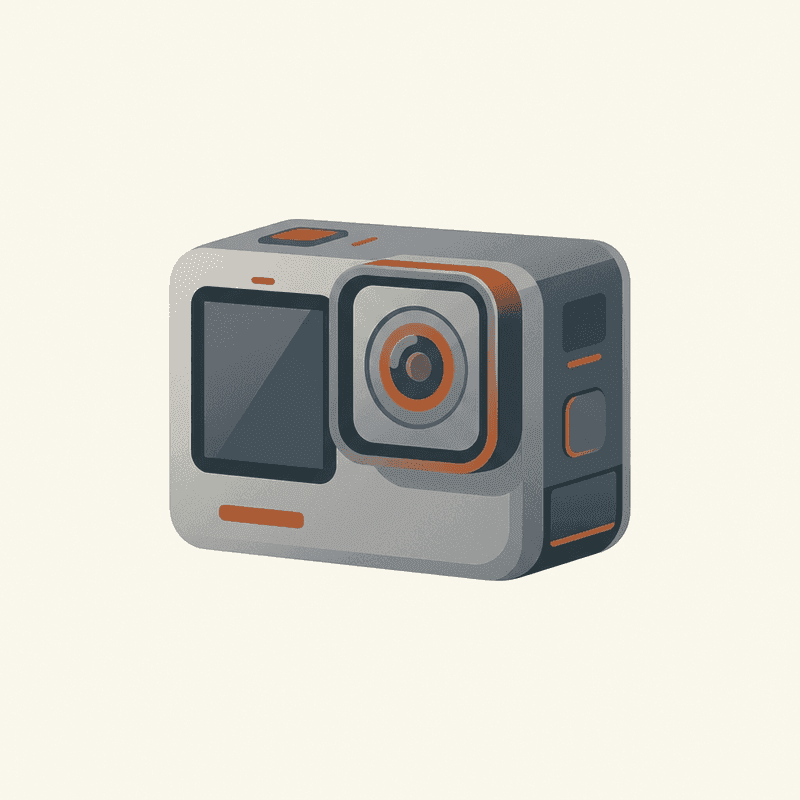
DJI Osmo Action 5 Pro
The longest-battery action camera in its class with strong low-light performance — a real GoPro alternative.
Best for: Creators who shoot long sessions and want better battery and low-light than GoPro.
Review note: The action-camera pick for longer recording sessions, especially when battery life and lower-light performance matter more than GoPro accessory breadth.
Pros
- 4K/120, 1/1.3" sensor with good dynamic range
- Real-world battery ~3+ hours at 4K/30
- Front and rear OLED touchscreens
- Magnetic quick-release mount
Cons
- Heavier and chunkier than the GO 3S
- Accessory ecosystem smaller than GoPro
- Cloud features tied to DJI Mimo app

GoPro HERO 13 Black
The most capable wearable action camera — overkill for casual lifelogging, ideal if you want the same kit for vlogs and sports.
Best for: Creators who need a single durable camera for vlogs, sports, and occasional hands-free use.
Review note: The best rugged all-rounder for buyers who want one camera for sports, POV footage, and occasional lifelogging rather than an all-day wearable.
Pros
- 5.3K/60 and 4K/120 with HyperSmooth stabilization
- Waterproof to 10 m without a case
- Magnetic-latch mounts and a broad accessory ecosystem
- GP-Lens swap system on HERO 13 for ND/macro/wide options
Cons
- Bulkier than a true lifelogger — most people will not wear it all day
- Battery realistically 1–1.5 h at high settings
- Subscription unlocks the best cloud/editing flow
Sensor and low light — winner: DJI
The DJI has the bigger sensor. A 1/1.3” chip versus the GoPro’s smaller stack means more light per pixel, cleaner shadows, and noticeably better behavior indoors, at dusk, and on overcast days. If you film concerts, ski runs that start before sunrise, or interior POV work, the Osmo Action 5 Pro pulls ahead. It’s not a one-inch sensor — the Osmo Pocket 3 owns that lane — but in the action-camera class, this is the clearest sensor advantage on the market.
The GoPro is fine in good light. It just gets noisier sooner.
Resolution and slow motion — close, GoPro edge
GoPro tops out at 5.3K/60. DJI tops out at 4K/120. Both do 4K/120 cleanly. So the GoPro has more pixels for cropping and reframing in post; the DJI has a slight edge in dynamic range at 4K because of the sensor. In practice, almost no one delivers in 5.3K. We give this round to GoPro on the spec sheet and call it a wash in the timeline.
Stabilization — close, GoPro edge
HyperSmooth is still, after a decade of iteration, the bar. DJI’s RockSteady has closed most of the gap and is genuinely good. Side-by-side on a mountain bike, you’d struggle to tell them apart without pixel-peeping. GoPro keeps a small lead in horizon-lock and in extreme low-light stabilization where the algorithm has less to work with. Either is good enough for any non-professional use.
Battery — winner: DJI, and it isn’t close
This is the category that decides the buy for a lot of people. The Osmo Action 5 Pro lasts about three hours in real-world 4K/30 shooting. The HERO 13 Black lasts about 1 to 1.5 hours at high settings. That’s a 2x gap, and it’s not theoretical. If you shoot a full day of hiking, a ski touring run, or a wedding B-roll session, you’ll burn through three GoPro batteries to one DJI battery.
GoPro fans will point out that swapping batteries is fast. True. But you have to remember to bring three batteries, and you have to remember to charge them.
Mount ecosystem — winner: GoPro, by a mile
This is GoPro’s home turf. Fifteen years of fingers-mount accessories means there is a GoPro mount for any object you own. Mouth grips, dog harnesses, surfboard nose mounts, drone gimbal cages, helmet boom arms. The HERO 13 adds the GP-Lens swap system — wide, ND, macro, anamorphic — which DJI has no real equivalent for. If your camera bag already has GoPro stuff in it, this matters.
DJI uses a magnetic quick-release, which is genuinely faster to clip and unclip, and adapters to the GoPro fingers mount are cheap. But the third-party long tail just isn’t there yet.
Waterproofing — winner: DJI on paper
DJI: 20 meters without a case. GoPro: 10 meters without a case. Both are fine for swimming, snorkeling, and most diving. If you actually scuba dive past 10 meters, the DJI is the only one of the two that’s rated for it. For everyone else, this is a tie.
App and cloud — close, both optional
DJI Mimo and the GoPro Quik app are both fine. Both offer auto-edits, cloud backup, and phone transfer. Both are optional — the camera writes to microSD on its own, and you can pull files over USB if you want to ignore the app.
GoPro Subscription is the noisier upsell. It bundles cloud backup, a streamlined editor, and a discounted “no questions asked” replacement, and the app will keep reminding you about it. DJI’s monetization is gentler. Neither is required, and we’d recommend trying both apps before deciding the cloud features matter.
Verdict
Buy the DJI Osmo Action 5 Pro if you shoot long sessions, if you film in mixed or low light, or if you don’t already own a pile of GoPro mounts. The battery alone is worth the switch for anyone who has ever cursed at a dead camera on a chairlift.
Buy the GoPro HERO 13 Black if you already have GoPro accessories, if you want the lens swap, or if you sometimes need to deliver in 5.3K. The ecosystem advantage is bigger than the spec sheet suggests.
Whichever you pick, verify the current price at the retailer. Both companies run frequent rebates, and the cheaper one this week is often the one you should buy.
Frequently asked questions
Is the DJI Osmo Action 5 Pro better than the GoPro HERO 13 Black?
Neither is strictly better. The DJI wins on battery life and low-light sensor performance. The GoPro wins on the accessory ecosystem, the GP-Lens swap system, and a small edge in top resolution at 5.3K. Pick by what you shoot, not by brand loyalty.
Which has better battery life?
The DJI, comfortably. Manufacturer-stated real-world battery at 4K/30 is around 3 hours on the Osmo Action 5 Pro, versus roughly 1 to 1.5 hours on the HERO 13 Black at higher settings. For long sessions, the DJI is the safer pick.
Can the DJI Osmo Action 5 Pro use GoPro mounts?
Yes, with an adapter. DJI uses its own magnetic quick-release, but adapters to the standard GoPro two-finger / three-finger fingers mount are common and cheap. If you already own GoPro mounts, you can keep most of them.
Which is better for lifelogging?
Neither, honestly. Both are action cameras with wearable mounts, not always-on lifeloggers. For true clip-and-forget capture, the Insta360 GO 3S or the Ray-Ban Meta glasses are closer to what people mean by lifelogging.
Are GoPro subscriptions required?
No. GoPro Subscription unlocks cloud backup, highlight editing, and discounted replacement, but the camera works fine without it. The same applies to the DJI Mimo app — optional, not required. The GoPro upsell is just more visible in the app.