Wearable & Lifelogging Cameras
The Best Small Action Cameras in 2026
Pocketable action cameras ranked by weight, mounting, and what they sacrifice for the small form factor. Includes a real cheap pick.
Pull each of these cameras out of the front pocket of a pair of jeans, one after another. The Insta360 GO 3S disappears in a closed hand. The GoPro HERO 13 Black is a small brick that you can feel pressing against your thigh when you sit down. The DJI Osmo Action 5 Pro is bigger again. The AKASO Brave 7 sits somewhere between the GoPro and a TV remote. That progression, more than any spec sheet, is what “small action camera” actually means.
The wearable use case starts with a simple question: would you actually wear this all afternoon? Most action cameras fail that test by lunch.
Insta360 GO 3S — winner if size matters most
The GO 3S is the only camera here that passes the all-afternoon test. The core pebble is about 39 grams, magnetically clips through a t-shirt, and shoots 4K/30. You forget it is on you. That is the whole pitch.

Insta360 GO 3S
The closest modern relative to the Narrative Clip's everyday wearability — 4K, magnetic clip, and a separate dock for longer captures.
Best for: Hands-free lifelogging and POV creators who want the smallest possible 4K camera.
Review note: The strongest Narrative Clip-style recommendation because it combines a tiny magnetic body, usable 4K footage, and an offline file workflow when you want one.
Pros
- Pebble-sized, ~39 g — clips magnetically through clothing
- 4K/30 video and FlowState stabilization
- Action Pod dock works as a remote viewfinder and extends battery
- IPX8 splash and shallow-water rating on the core unit
Cons
- Battery on the core unit is short on its own — best paired with the dock
- Wide fixed lens; no optical zoom
- Editing flow assumes the Insta360 app
The catch is battery. The pebble alone runs out in well under an hour at 4K. Insta360’s answer is the Action Pod, the bundled dock that doubles as a viewfinder and a much bigger battery. So the real GO 3S is a two-part system: you wear the pebble, you carry the pod in a bag, and you reunite them when the pebble dies. That is more friction than the marketing suggests, but it is still smaller than carrying a HERO.
If you want a camera that looks like a Narrative Clip and shoots like a 2026 action cam, this is the one.
GoPro HERO 13 Black — small for an action cam, not for a wearable
The HERO 13 is small in the sense that a bar of soap is small. It is not small in the sense that you can forget you’re wearing it.
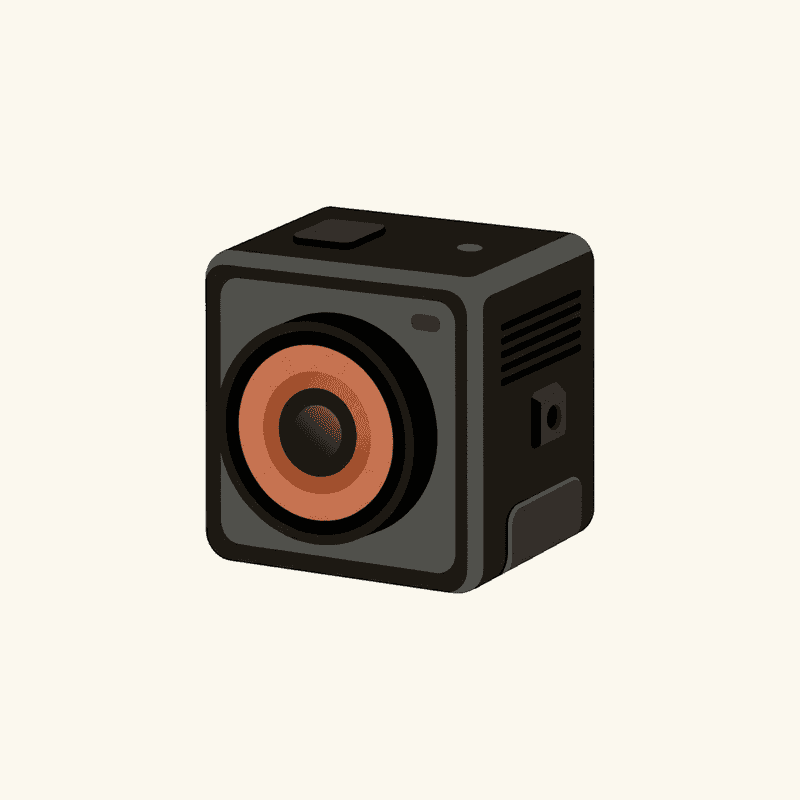
GoPro HERO 13 Black
The most capable wearable action camera — overkill for casual lifelogging, ideal if you want the same kit for vlogs and sports.
Best for: Creators who need a single durable camera for vlogs, sports, and occasional hands-free use.
Review note: The best rugged all-rounder for buyers who want one camera for sports, POV footage, and occasional lifelogging rather than an all-day wearable.
Pros
- 5.3K/60 and 4K/120 with HyperSmooth stabilization
- Waterproof to 10 m without a case
- Magnetic-latch mounts and a broad accessory ecosystem
- GP-Lens swap system on HERO 13 for ND/macro/wide options
Cons
- Bulkier than a true lifelogger — most people will not wear it all day
- Battery realistically 1–1.5 h at high settings
- Subscription unlocks the best cloud/editing flow
What you get for the extra grams: 5.3K/60, 4K/120, the GP-Lens swap system, waterproof to 10 meters without a case, and an accessory ecosystem that has been refined for a decade. If you ever plan to use the same camera for a bike ride, a vlog, and a hands-free walk through a market, the HERO is the safest bet. If you only need the hands-free walk, you are paying for capabilities you will not use, and wearing a brick to do it.
DJI Osmo Action 5 Pro — biggest of the three, longest battery
This is the camera you buy when “small” stops being the priority and “I want to shoot for two hours without thinking about it” starts.
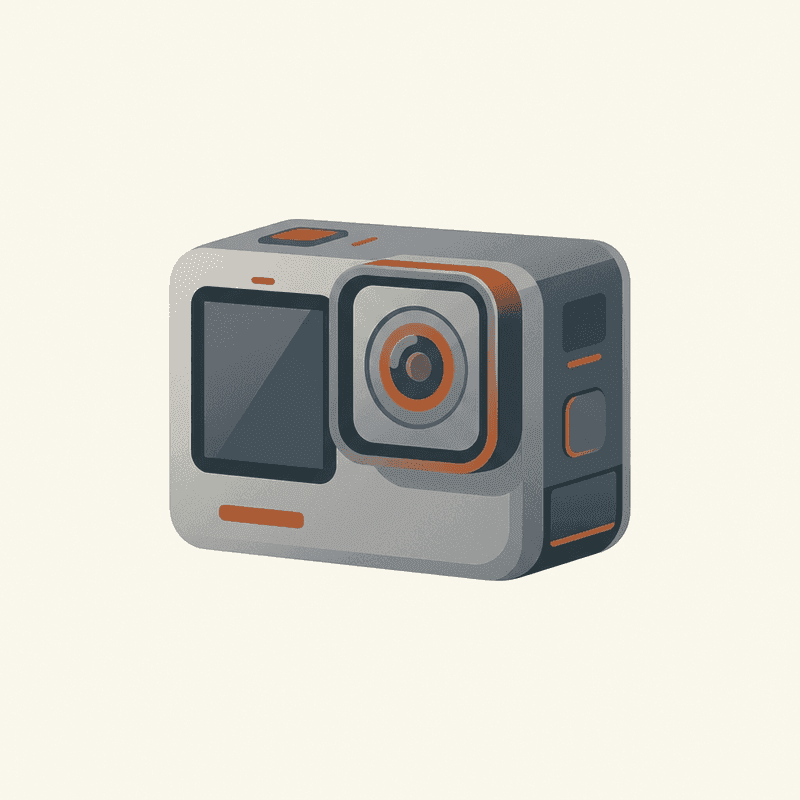
DJI Osmo Action 5 Pro
The longest-battery action camera in its class with strong low-light performance — a real GoPro alternative.
Best for: Creators who shoot long sessions and want better battery and low-light than GoPro.
Review note: The action-camera pick for longer recording sessions, especially when battery life and lower-light performance matter more than GoPro accessory breadth.
Pros
- 4K/120, 1/1.3" sensor with good dynamic range
- Real-world battery ~3+ hours at 4K/30
- Front and rear OLED touchscreens
- Magnetic quick-release mount
Cons
- Heavier and chunkier than the GO 3S
- Accessory ecosystem smaller than GoPro
- Cloud features tied to DJI Mimo app
The Action 5 Pro is heavier than the HERO and physically larger in the hand. In exchange, the 1/1.3-inch sensor handles low light better than anything else in this group, real-world battery clears three hours at 4K/30, and the front and rear OLEDs make framing trivial. As a wearable, it is borderline. As an action camera, it is the strongest pick on this page for anyone who shoots long sessions.
AKASO Brave 7 — the budget option that’s only barely larger
The Brave 7 is the camera you buy when the answer to “what’s a small action camera” is really “what’s a cheap one.”
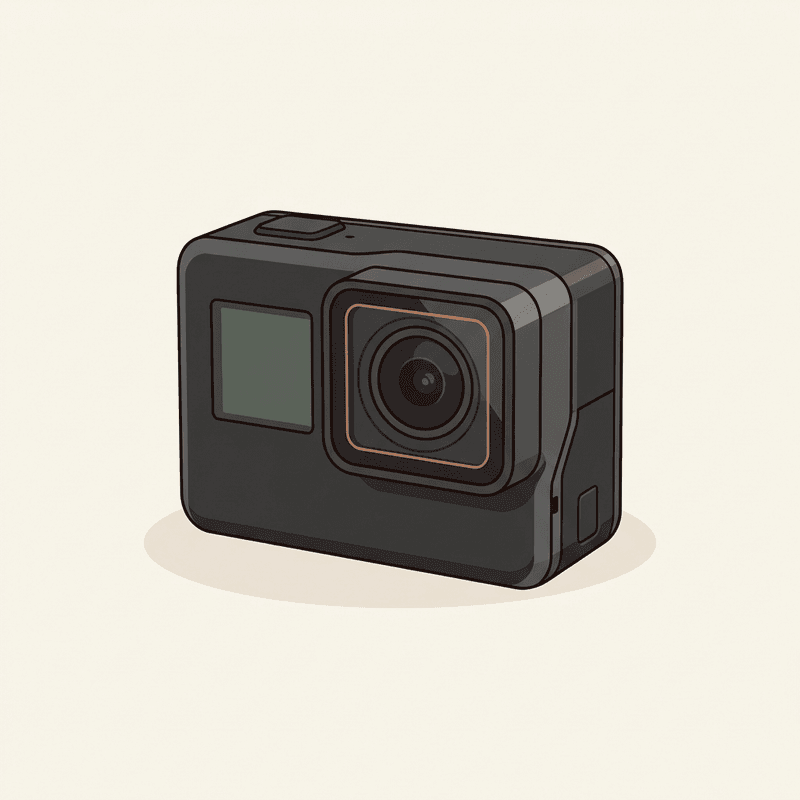
AKASO Brave 7
A budget action camera that gets most of the GoPro feature list at roughly a third of the price.
Best for: Budget-conscious buyers and first wearables for kids/family.
Review note: A budget-friendly starter action camera for families, with acceptable basics but weaker stabilization and app polish than the flagship options.
Pros
- 4K/30 capable
- IPX7 without case (small dives need housing)
- Dual-screen design
Cons
- Stabilization is workable, not class-leading
- App polish trails the big brands
At roughly 127 grams it is actually a touch lighter than the HERO 13. It shoots 4K/30, it has dual screens, and it costs about a third of what the brand-name cameras cost. Stabilization is workable rather than excellent, the app is clunky, and the low-light image falls apart fast. None of that matters for kids’ soccer footage, a family snorkel, or a first wearable for a teenager. We would not put it on a paying assignment. We would absolutely put it on a backpack strap for a $140 vacation rig.
Trade-offs of going small
Every gram you save on a wearable comes from somewhere specific.
Battery. A smaller body holds a smaller cell. The GO 3S core pebble runs roughly half an hour to forty minutes at 4K. The HERO 13 stretches to an hour and change. The Action 5 Pro past three. Tiny cameras live and die by their dock or a spare battery.
Lens and sensor. The GO 3S has a fixed wide lens and a smaller sensor than the HERO or the Action 5. In good light it is fine. Indoors at dusk you can see the difference instantly.
Mic quality. Smaller bodies have smaller mic ports and less room for wind treatment. Every camera on this page benefits from an external mic; the small ones need one.
Mounting. The GO 3S leans almost entirely on its magnetic clip system. The HERO and Action 5 use the standard two-prong action-cam mount and work with a decade of third-party rigs. If you already own GoPro mounts, the math shifts.
What to actually buy
If you want a camera you can wear on your shirt and forget, buy the Insta360 GO 3S. It is the only one of these that earns the word “small.”
If you want one camera that does everything competently, buy the GoPro HERO 13 Black and stop reading buyer guides.
If you mostly shoot long handheld sessions and weight is not the constraint, the DJI Osmo Action 5 Pro is the better camera, full stop.
And if you have $150 and a vacation next month, the AKASO Brave 7 will do the job without embarrassing itself in daylight.
Compare wearable cameras
Swipe sideways to see all columns →
| Camera | Best for | Resolution | Battery | Mounting | Cloud | Approx. price | Buy |
|---|---|---|---|---|---|---|---|
| Insta360 GO 3S Insta360 | Hands-free lifelogging and POV creators who want the smallest possible 4K camera. | 4K/30 | 0.65 h | Magnetic clip | Optional | $400 | Check price ↗ |
| GoPro HERO 13 Black GoPro | Creators who need a single durable camera for vlogs, sports, and occasional hands-free use. | 5.3K/60 | 1.5 h | Multi-mount | Optional | $400 | Check price ↗ |
| DJI Osmo Action 5 Pro DJI | Creators who shoot long sessions and want better battery and low-light than GoPro. | 4K/120 | 3 h | Multi-mount | Optional | $350 | Check price ↗ |
| Ray-Ban Meta Smart Glasses Ray-Ban / Meta | Daily wearers who want POV photos and short clips without holding a camera. | 1080p/30 | 4 h | Glasses | Required | $300 | Check price ↗ |
| AKASO Brave 7 AKASO | Budget-conscious buyers and first wearables for kids/family. | 4K/30 | 1.5 h | Multi-mount | Optional | $140 | Check price ↗ |
| DJI Osmo Pocket 3 DJI | Travel vloggers who want stabilized, low-light-capable footage without a wearable. | 4K/120 | 1.6 h | Multi-mount | Optional | $520 | Check price ↗ |
Prices and specs are publisher estimates — verify at the retailer before buying.
Frequently asked questions
What's the smallest action camera in 2026?
The Insta360 GO 3S, at roughly 39 grams for the core pebble. Nothing else from a major brand competes on weight while still shooting 4K. The Action Pod dock it ships with is heavier, but you can leave that at home and just wear the pebble.
Is the GO 3S smaller than a GoPro?
By a lot. The GO 3S pebble is about 39 g. The GoPro HERO 13 Black is around 158 g — four times the weight. The HERO is small for an action camera and large for anything you'd wear on a shirt for six hours.
Are budget action cams like the AKASO Brave 7 worth it?
If you want 4K footage, a waterproof body, and basic stabilization for under $150, yes. The image is not GoPro-grade and the app is rougher, but most casual users will not care. We would not buy it for paid client work.
Can you wear a GoPro HERO on your shirt?
You can with a magnetic chest mount, but you will notice. The HERO weighs about 158 g and pulls thin fabric down. It is fine on a strap or harness, awkward on a t-shirt, ridiculous on a button-down.
What's the battery hit on going small?
Real. The GO 3S core pebble runs roughly 35 to 40 minutes of 4K capture on its own. The HERO 13 stretches to 1 to 1.5 hours at high settings. The DJI Osmo Action 5 Pro pushes past three hours. Tiny cameras need docks, swap batteries, or both.