Wearable & Lifelogging Cameras
The Best POV Cameras of 2026 for Creators
Point-of-view cameras for creators in 2026 — ranked by stabilization, low-light, mounting, and how much editing they let you avoid.
“POV” is a fashion term for a camera category that has been quietly stable for about a decade. The cook turning to camera. The climber on the wall. The cyclist hammering through a corner. The streamer walking and talking. What makes a good POV camera in 2026 is what made one good in 2018: stabilization, low-light tolerance, a mount system that won’t fall off, and audio that doesn’t sound like a hairdryer. The kit is just more polished now.
A few things have actually changed. Sensors got bigger. Stabilization got close to gimbal-quiet without the gimbal. Battery is still the weak link.
Best overall: GoPro HERO 13 Black
The HERO 13 is what most working POV creators have on a mount somewhere. It shoots 5.3K/60 and 4K/120, HyperSmooth handles every kind of judder you can throw at it short of a jackhammer, and it’s waterproof to 10 m without a case. The GP-Lens swap system is the real 2024 upgrade — you can drop on an ND or a macro element without committing to a whole second camera.
Why we pick it first: nothing else has the accessory ecosystem. Every chesty, every helmet bracket, every shorty handle on Earth is shaped for a GoPro. That matters more than spec wars when you’re improvising on location.
Battery is honest about itself (around 1.5 hours at high settings) and the subscription unlocks the nicest cloud edit flow if you want it. You don’t have to.
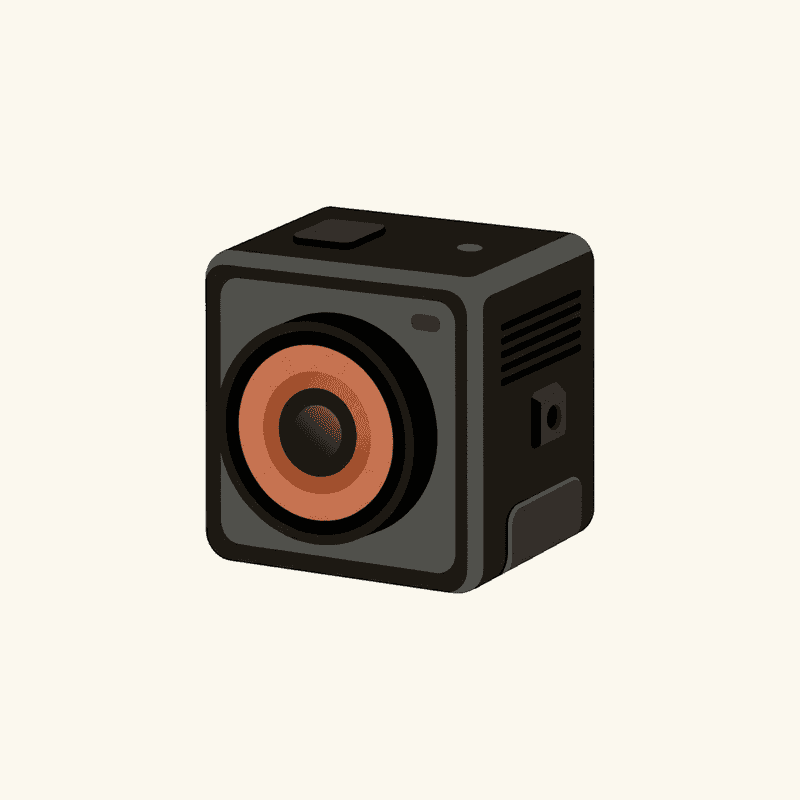
GoPro HERO 13 Black
The most capable wearable action camera — overkill for casual lifelogging, ideal if you want the same kit for vlogs and sports.
Best for: Creators who need a single durable camera for vlogs, sports, and occasional hands-free use.
Review note: The best rugged all-rounder for buyers who want one camera for sports, POV footage, and occasional lifelogging rather than an all-day wearable.
Pros
- 5.3K/60 and 4K/120 with HyperSmooth stabilization
- Waterproof to 10 m without a case
- Magnetic-latch mounts and a broad accessory ecosystem
- GP-Lens swap system on HERO 13 for ND/macro/wide options
Cons
- Bulkier than a true lifelogger — most people will not wear it all day
- Battery realistically 1–1.5 h at high settings
- Subscription unlocks the best cloud/editing flow
Best low-light alternative: DJI Osmo Action 5 Pro
If your POV work happens at the edges of the day — dawn cycling, evening cooking videos, indoor gym lighting — the Action 5 Pro is the better pick. The 1/1.3-inch sensor pulls more light than the HERO 13’s, dynamic range is genuinely good for the category, and the front and rear OLEDs make framing yourself less of a guess. Real-world battery sits at roughly three hours at 4K/30, which is the longest in its class.
The trade is a smaller accessory market and the DJI Mimo app, which is fine but not GoPro-fine. We’d buy it anyway for low-light-heavy work.
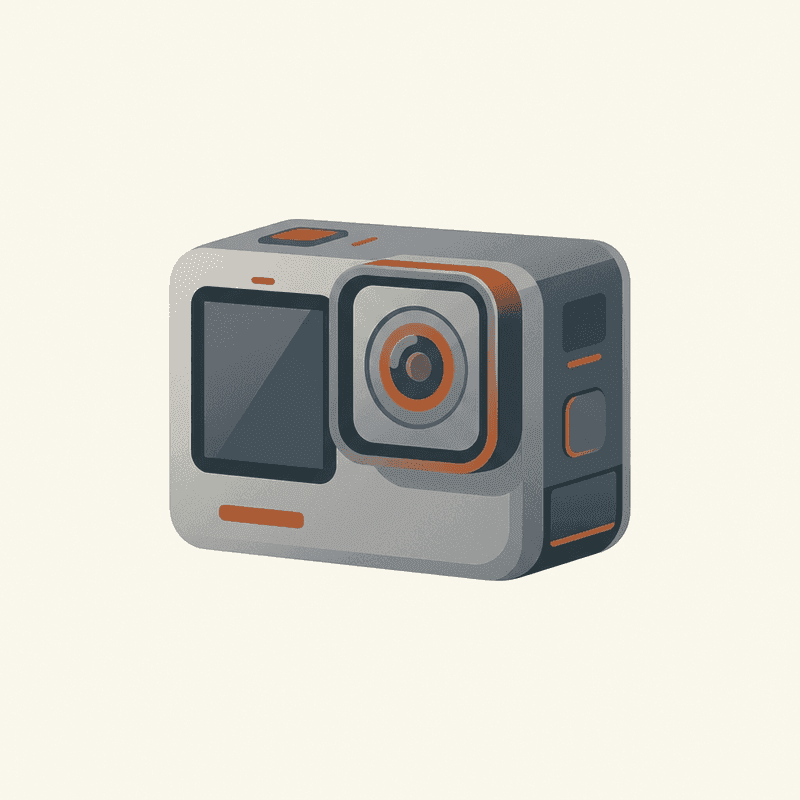
DJI Osmo Action 5 Pro
The longest-battery action camera in its class with strong low-light performance — a real GoPro alternative.
Best for: Creators who shoot long sessions and want better battery and low-light than GoPro.
Review note: The action-camera pick for longer recording sessions, especially when battery life and lower-light performance matter more than GoPro accessory breadth.
Pros
- 4K/120, 1/1.3" sensor with good dynamic range
- Real-world battery ~3+ hours at 4K/30
- Front and rear OLED touchscreens
- Magnetic quick-release mount
Cons
- Heavier and chunkier than the GO 3S
- Accessory ecosystem smaller than GoPro
- Cloud features tied to DJI Mimo app
Smallest for run-and-gun: Insta360 GO 3S
There is a class of POV footage that only happens when the camera disappears. Cooking close-ups where a HERO 13 on your chest blocks your hands. Crowded shots where you don’t want to look like a film crew. Kids who clam up the second they see a lens.
The GO 3S is 39 grams, clips magnetically through a shirt, and shoots 4K/30 with FlowState stabilization. The Action Pod dock acts as a viewfinder and extends battery for longer takes. On its own, the core unit runs short — under an hour — so plan around the dock for anything sustained.
This is the spiritual heir to the Narrative Clip’s wearability, with about a thousand times the image quality.

Insta360 GO 3S
The closest modern relative to the Narrative Clip's everyday wearability — 4K, magnetic clip, and a separate dock for longer captures.
Best for: Hands-free lifelogging and POV creators who want the smallest possible 4K camera.
Review note: The strongest Narrative Clip-style recommendation because it combines a tiny magnetic body, usable 4K footage, and an offline file workflow when you want one.
Pros
- Pebble-sized, ~39 g — clips magnetically through clothing
- 4K/30 video and FlowState stabilization
- Action Pod dock works as a remote viewfinder and extends battery
- IPX8 splash and shallow-water rating on the core unit
Cons
- Battery on the core unit is short on its own — best paired with the dock
- Wide fixed lens; no optical zoom
- Editing flow assumes the Insta360 app
Best handheld for travel/POV hybrid: Osmo Pocket 3
The Pocket 3 is not technically a POV camera. It’s a pocket gimbal with a 1-inch sensor, 4K/120, and three-axis mechanical stabilization. People use it for POV anyway because the footage looks like a much bigger camera shot it. Walking shots, food shots, dim restaurant interiors — the things action cameras quietly struggle with.
You hold it. That’s the catch. No chesty, no helmet. But for travel vlogs and any POV that involves moving slowly through a place you want to remember, it’s the most flattering footage in this list.
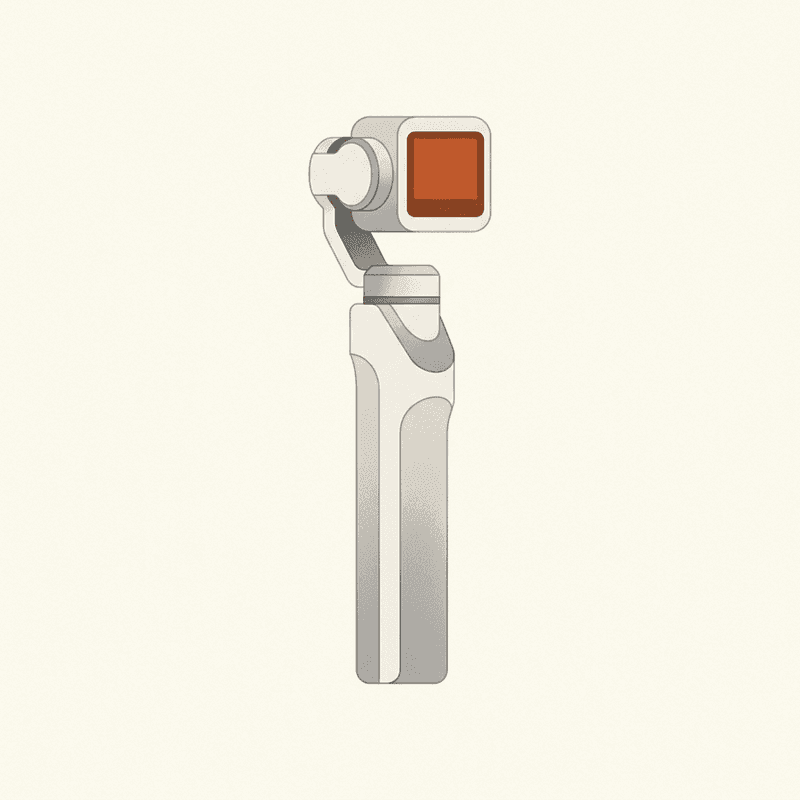
DJI Osmo Pocket 3
Not a true wearable — a pocket gimbal — but the best handheld pick for travel-vlog footage.
Best for: Travel vloggers who want stabilized, low-light-capable footage without a wearable.
Review note: A strong travel-vlog camera with excellent stabilized footage, but it is a handheld pocket gimbal rather than a true lifelogging wearable.
Pros
- 1" sensor, 4K/120
- 3-axis mechanical gimbal
- Excellent in low light
Cons
- Not hands-free
- Larger than a lifelogger
- No real waterproof rating
Mounts, briefly
A chesty (chest harness) for sports and any activity where your hands are doing the work. Cycling, climbing, woodworking. The horizon stays mostly level and your arms stay out of frame.
A clip-style mount for daily and walking-around use. The GO 3S’s magnetic clip is the cleanest of these. A standard GoPro magnetic mount also works on a backpack strap.
A helmet mount for cycling, motorsport, and skiing. Higher angle, less head-bob than people expect because the helmet itself dampens motion.
Skip the chin mounts unless you’ve seen your own face in one and liked it.
What we wouldn’t buy
Any phone-mount rig you have to hold for hours. The reason POV cameras exist is so you don’t have to think about holding them. A phone with a grip is fine for a thirty-second clip; it’s punishing for a day of shooting.
Ultra-cheap no-name action cameras under $80. The lens elements are bad, the stabilization is software-only and badly tuned, and the apps are often abandoned within a year. The AKASO Brave 7 is the floor we’d buy at.
Compare the picks
Compare wearable cameras
Swipe sideways to see all columns →
| Camera | Best for | Resolution | Battery | Mounting | Cloud | Approx. price | Buy |
|---|---|---|---|---|---|---|---|
| Insta360 GO 3S Insta360 | Hands-free lifelogging and POV creators who want the smallest possible 4K camera. | 4K/30 | 0.65 h | Magnetic clip | Optional | $400 | Check price ↗ |
| GoPro HERO 13 Black GoPro | Creators who need a single durable camera for vlogs, sports, and occasional hands-free use. | 5.3K/60 | 1.5 h | Multi-mount | Optional | $400 | Check price ↗ |
| DJI Osmo Action 5 Pro DJI | Creators who shoot long sessions and want better battery and low-light than GoPro. | 4K/120 | 3 h | Multi-mount | Optional | $350 | Check price ↗ |
| Ray-Ban Meta Smart Glasses Ray-Ban / Meta | Daily wearers who want POV photos and short clips without holding a camera. | 1080p/30 | 4 h | Glasses | Required | $300 | Check price ↗ |
| AKASO Brave 7 AKASO | Budget-conscious buyers and first wearables for kids/family. | 4K/30 | 1.5 h | Multi-mount | Optional | $140 | Check price ↗ |
| DJI Osmo Pocket 3 DJI | Travel vloggers who want stabilized, low-light-capable footage without a wearable. | 4K/120 | 1.6 h | Multi-mount | Optional | $520 | Check price ↗ |
Prices and specs are publisher estimates — verify at the retailer before buying.
Frequently asked questions
What's the difference between a POV camera and an action camera?
Mostly marketing. POV is a creator term for first-person footage; action camera is the hardware category most POV creators use. A POV camera is any small, mountable, stabilized camera you can point away from yourself — a GoPro is an action camera used for POV work.
Is the Insta360 GO 3S a POV camera?
Yes, and it's one of the few that's small enough to genuinely disappear. The magnetic clip works through a t-shirt and the Action Pod gives you a viewfinder when you want one. It's POV by design, not by mount.
Do POV cameras work in low light?
Not really. The sensors are small. The DJI Osmo Action 5 Pro's 1/1.3-inch sensor is the best of the bunch for dim scenes, and the Osmo Pocket 3's 1-inch sensor is better still, but neither will save you indoors at night. Add light or accept the noise.
What's the best POV camera for cycling?
GoPro HERO 13 Black on a helmet or chest mount. HyperSmooth handles vibration, it's waterproof to 10 m so rain is fine, and the mount ecosystem is the most mature. The Osmo Action 5 Pro is a strong runner-up if you ride longer than its battery.
Do I need a gimbal?
If you're walking or running, no — modern electronic stabilization is genuinely good. If you want cinematic walking footage in low light, the Osmo Pocket 3 is a gimbal and a camera in one and that's the case for it.