Wearable & Lifelogging Cameras
GoPro HERO 13 vs Insta360 GO 3S for Lifelogging
For the wear-it-all-day, capture-the-mundane lifelogging use case: the Insta360 GO 3S is the more honest pick. Here's why, by every metric that matters.
The short answer is the Insta360 GO 3S. If “lifelogging” to you means wearing a camera through the workday, the school run, the grocery store, and dinner with friends, the GO 3S is the only one of these two that you’ll actually keep on. The GoPro HERO 13 Black is the better camera. The GO 3S is the better lifelogger. Those are different jobs.
We’ll go through this section by section, pick a winner each time, and tally up at the bottom.
The two cameras

Insta360 GO 3S
The closest modern relative to the Narrative Clip's everyday wearability — 4K, magnetic clip, and a separate dock for longer captures.
Best for: Hands-free lifelogging and POV creators who want the smallest possible 4K camera.
Review note: The strongest Narrative Clip-style recommendation because it combines a tiny magnetic body, usable 4K footage, and an offline file workflow when you want one.
Pros
- Pebble-sized, ~39 g — clips magnetically through clothing
- 4K/30 video and FlowState stabilization
- Action Pod dock works as a remote viewfinder and extends battery
- IPX8 splash and shallow-water rating on the core unit
Cons
- Battery on the core unit is short on its own — best paired with the dock
- Wide fixed lens; no optical zoom
- Editing flow assumes the Insta360 app
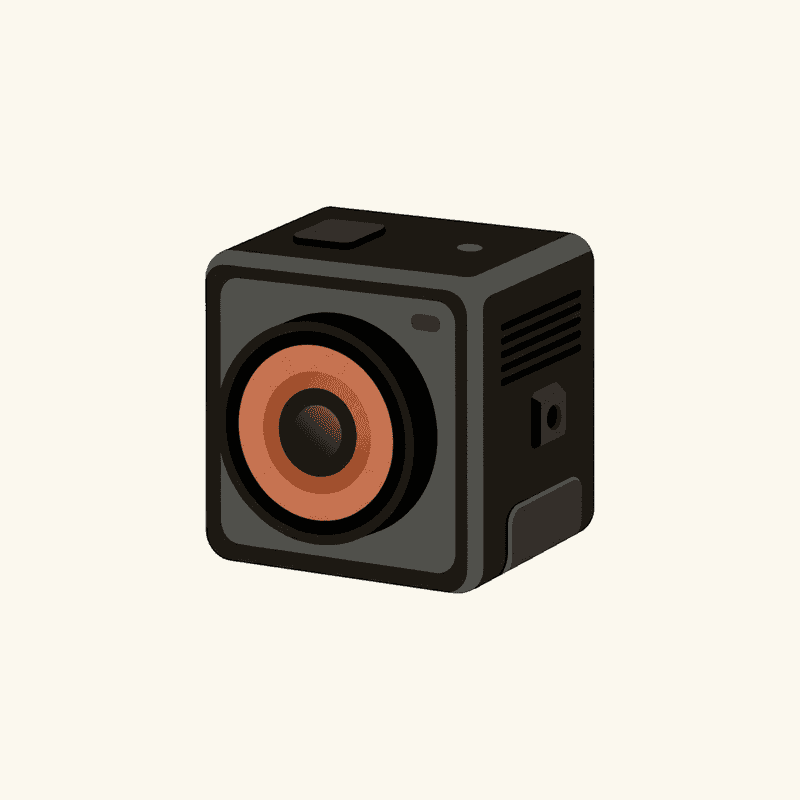
GoPro HERO 13 Black
The most capable wearable action camera — overkill for casual lifelogging, ideal if you want the same kit for vlogs and sports.
Best for: Creators who need a single durable camera for vlogs, sports, and occasional hands-free use.
Review note: The best rugged all-rounder for buyers who want one camera for sports, POV footage, and occasional lifelogging rather than an all-day wearable.
Pros
- 5.3K/60 and 4K/120 with HyperSmooth stabilization
- Waterproof to 10 m without a case
- Magnetic-latch mounts and a broad accessory ecosystem
- GP-Lens swap system on HERO 13 for ND/macro/wide options
Cons
- Bulkier than a true lifelogger — most people will not wear it all day
- Battery realistically 1–1.5 h at high settings
- Subscription unlocks the best cloud/editing flow
Size and weight — winner: GO 3S
The GO 3S core unit is a 39 g pebble. About the size of a thumb tip. The HERO 13 Black is 158 g and roughly the volume of a deck of cards. That is a four-times weight difference, and the geometry is even worse: the GoPro is a brick you feel on your sternum, while the GO 3S is something you forget about.
For an action camera mounted to a helmet for an hour, weight is irrelevant. For a camera you want to wear from 8 a.m. to 8 p.m., it’s everything.
Mounting and wearability — winner: GO 3S
The GO 3S has a magnetic mount that clamps a thin metal pendant inside your shirt to the camera outside. No straps. No clips that bite into fabric. You walk out of the house wearing it the way you wear a button. People don’t notice.
The HERO 13 needs a chest harness, a magnetic latch mount on a clip, a clamp, or a hat mount. Every one of these solutions advertises “I am wearing a camera.” Some are uncomfortable after thirty minutes. None of them are subtle.
For lifelogging the goal is to forget you’re wearing it. The GO 3S is built for that. The HERO 13 isn’t.
Capture quality — winner: GoPro
This is where GoPro wins, and it isn’t close on paper. The HERO 13 shoots 5.3K at 60 fps, 4K at 120, and uses HyperSmooth stabilization that’s still the reference standard for handlebar-and-helmet chaos. It also takes GP-Lens swaps for macro, wide, or ND, which means one body handles a lot of jobs.
The GO 3S tops out at 4K/30 with FlowState stabilization. FlowState is genuinely good for a camera this small. But at speed, in low light, or in any scene with fast motion, the GoPro pulls ahead. If image quality is the metric you care about most, you are not really lifelogging. You’re shooting B-roll.
Battery for all-day wear — slight edge: depends
Both cameras are short on their own. The GO 3S core unit runs under an hour standalone but lives in the Action Pod, which roughly triples that and adds a touchscreen viewfinder. The HERO 13 is 1 to 1.5 hours of continuous recording at higher settings and longer if you back off to 1080p or use shorter clips.
For an action-cam use case, the GoPro and an extra battery is the right answer. For a true lifelog (short clips throughout the day, long idle stretches in between) the GO 3S in its pod handles a day with one mid-afternoon top-up. Call this one a draw with conditions.
Cloud and ownership — tie
Both are optional-cloud. The Insta360 app handles transfers, edits, and an optional cloud tier. GoPro Quik works similarly with a subscription that unlocks more cloud and software features. Neither camera bricks if you skip the subscription. Both let you pull files off via cable or app and own them outright. After what happened to the original Narrative cloud, that matters more to us than the spec sheet does.
Social acceptability — winner: GO 3S
You can wear the GO 3S to brunch and most people will not register it. You cannot say the same of a GoPro strapped to your chest. This is a real, practical lifelogging factor. The cameras you actually wear are the ones that don’t make every interaction about the camera.
That same trait is the GO 3S’s biggest ethical weakness. Small means stealthy, and stealthy means people who don’t know you’re recording. The fix is etiquette, not hardware: ask before you film indoors, don’t point it at strangers’ faces, and offer to delete on request. We are tired of saying this. We are going to keep saying it.
Audio for memory clips — winner: GoPro
If your lifelog is going to be watchable at all, audio matters more than people think. The HERO 13’s mic array is meaningfully better in wind, in restaurants, and at conversational distance. The GO 3S records audio fine in a quiet room and gets murky in any environment with real ambient noise.
For silent-memory archives, this doesn’t matter. For clips you’ll actually rewatch with sound, it does.
The verdict
For lifelogging in the traditional sense, the kind the original Narrative Clip was built for, get the GO 3S. It is the camera you will keep on, which is the only camera that will capture anything.
If your “lifelogging” is actually weekend adventures, bike rides, ski days, beach trips, the HERO 13 is a better all-rounder and you’ll be glad of the resolution and stabilization later.
The two-camera answer (HERO 13 for trips, GO 3S for everyday) is real and many people land there. It’s also $800 of cameras for a hobby. Pick one. We’d pick the GO 3S, then add a GoPro if and only if the trip footage stops being good enough.
Compare wearable cameras
Swipe sideways to see all columns →
| Camera | Best for | Resolution | Battery | Mounting | Cloud | Approx. price | Buy |
|---|---|---|---|---|---|---|---|
| Insta360 GO 3S Insta360 | Hands-free lifelogging and POV creators who want the smallest possible 4K camera. | 4K/30 | 0.65 h | Magnetic clip | Optional | $400 | Check price ↗ |
| GoPro HERO 13 Black GoPro | Creators who need a single durable camera for vlogs, sports, and occasional hands-free use. | 5.3K/60 | 1.5 h | Multi-mount | Optional | $400 | Check price ↗ |
Prices and specs are publisher estimates — verify at the retailer before buying.
Prices in the table are approximate. Always verify at the retailer before you buy.
Frequently asked questions
Insta360 GO 3S or GoPro HERO 13 for lifelogging?
The GO 3S, every time. It weighs 39 g, clips magnetically through a shirt, and disappears on you within an hour. The HERO 13 is a better camera in almost every spec sheet sense, but you will not wear a 158 g brick on your chest from breakfast to dinner.
Is the GoPro HERO 13 too big to wear all day?
For most people, yes. It is a 158 g, palm-sized cube designed to be strapped to a helmet, handlebar, or chest harness for a few hours. People wear them all day on bike tours and ski trips. They do not wear them through a normal Tuesday.
Does the Insta360 GO 3S have a visible LED indicator when recording?
It has small status LEDs on the core unit, and the Action Pod has a screen. They are dimmer and less obvious than the GoPro's front-facing red record indicator. That is a usability win for the wearer and a privacy concern for everyone around them — ask before you record.
Which has better battery for a full day?
Neither lasts a full day on its own. The GO 3S core unit is rated under an hour standalone but stretches with the Action Pod dock. The HERO 13 is roughly 1 to 1.5 hours of continuous high-setting capture. For lifelogging cadence (short clips, not continuous video), the GO 3S in the pod will outlast the GoPro.
Can either replace the original Narrative Clip?
Not really. The Clip took a photo every 30 seconds for two days on a charge and uploaded everything to a cloud that organized it for you. Neither modern camera does that automatically. The GO 3S gets closest in form factor; the software side is on you.